
Popping corks!
Original article from PortugalResident.com
For some of us, popping corks may be a regular occurrence throughout the year, but as we get closer to the holiday season, perhaps we will pop even more bottles - or maybe just one very special bottle - to celebrate family, friends, life, and the spirit of the holiday.
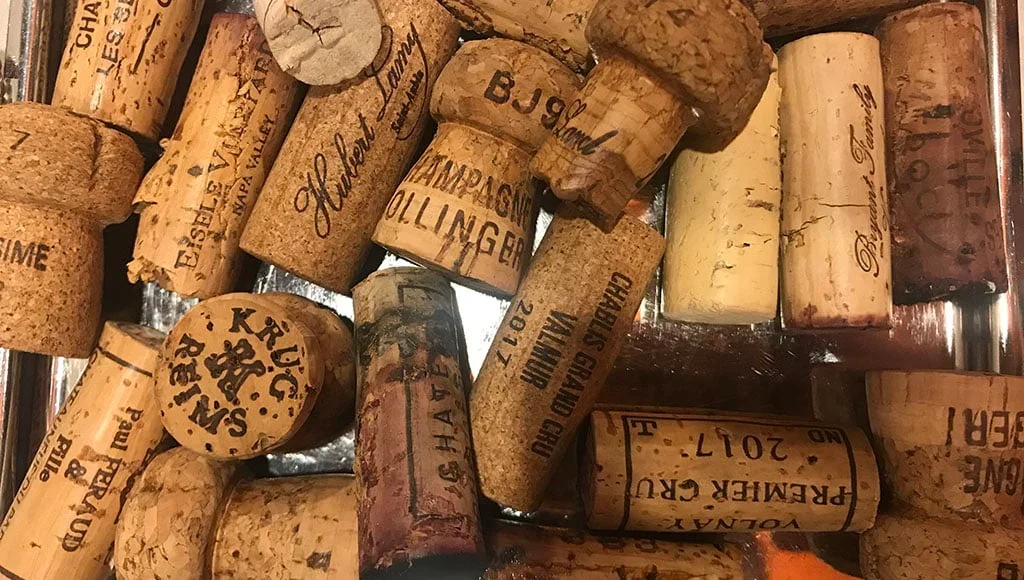
So, in homage to the season and that lovable hiss or “pop” from a bottle of sparkling being opened, or the light pop of the cork exiting the still wine bottle, and the short sniff at the wine-tinged end after, I thought I’d do a deep dive on cork!
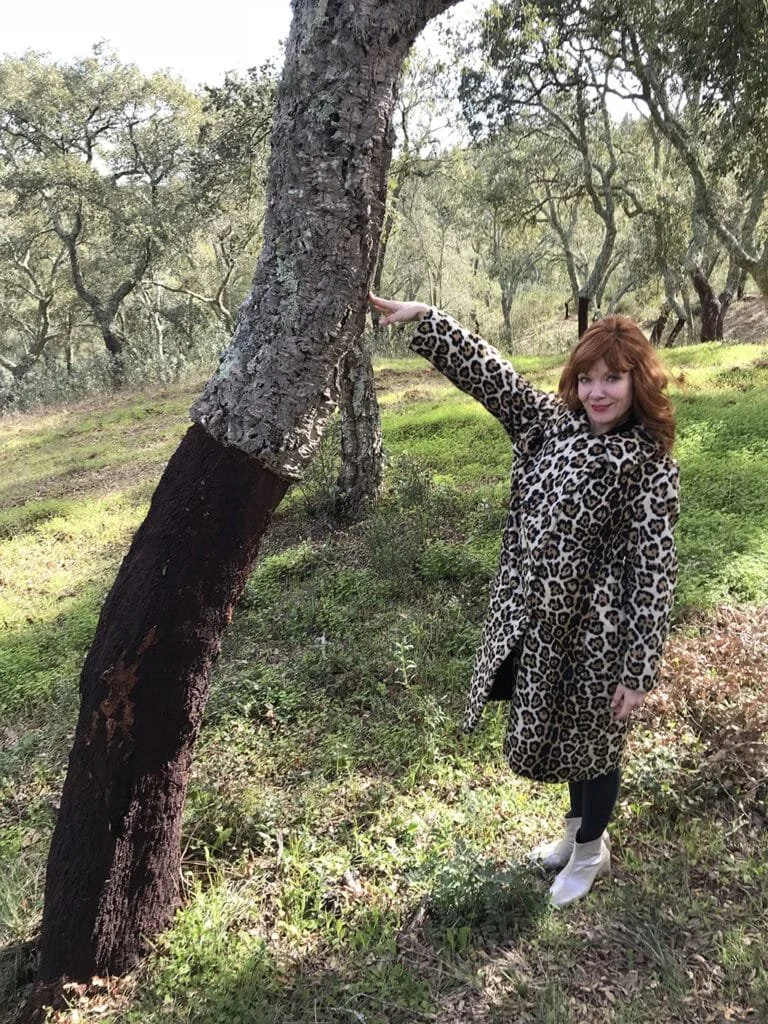
The cork oak (Quercus suber) is a tree native to the Mediterranean region, primarily planted in Portugal, Spain, and North Africa. This national treasure, as it was declared our National Tree here in 2011, consequently makes up one of Portugal’s most significant economic sectors, with 730,000 hectares of cork forest, and supplies 50-70% of the world’s cork (depending on which publication you read).
Regenerative and sustainable, the Quercus tree’s bark can be stripped by hand only without harming it, and it regenerates remarkably – like skin – which can be stripped again every nine years. A cork tree’s life span can be 200 years or longer. For example, “The Whistler Tree” in Marateca, here in Portugal, is approximately 241 years old, with a canopy and splendor that are absolutely worth taking a detour to see.
The history of cork
The history of cork and its many uses span thousands of years, from early Mediterranean civilizations, such as the Greeks and Romans, to the modern cork industry today.
Egyptians and Greeks were among the first to discover cork’s properties, using it for fishing floats, sandals, containers, and for insulation in homes’ roofs and ceilings.
The Romans used cork in the same way as the Phoenicians and Greeks had before them, but they especially valued it for its sealing properties and used it as stoppers for wine amphorae and other vessels.
In the Iberian Peninsula, the Moors used cork as an insulating material to regulate temperatures. Like many of the other cultural traditions they left with us, such as advanced distillation methods and advanced irrigation methods, the Moors expanded and refined the management of cork oak forests. Contributing significantly to the development of the montado or montado de sobro system – an intricate balance that weaves together forestry, agriculture, and livestock grazing, also referred to as a High Nature Value system, which is still used today.
After the fall of Rome during the Middle Ages, cork was used in monasteries as an insulating material. During the Age of Discovery, Portuguese ships used cork in their construction, including caravels (light, maneuverable sailing ships) used to explore new worlds – like the Pinta and the Nina, the caravels Christopher Columbus used to sail to the New World.
During the 17th and 18th centuries, as Châteaux in Europe sought to bottle their own wine to avoid spoilage and fraud, the need for the mass production of glass bottles increased. This demand in England and France increased the need for an effective sealant, which brings us to one of the most essential uses of cork, in my opinion: wine!

Mmmmm, wine!
Dom Pierre Pérignon, a Benedictine monk who was the cellar master at the Abbey of Hautvillers in France during the 16th and 17th centuries, was one of the first to recognize the brilliance of cork and its magical sealing properties.
During a trip to Catalonia, Dom Pérignon observed that Spanish voyagers used cork to plug their water gourds. Consequently, he realized the cork’s natural elasticity and impermeability, allowing it to be compressed into a bottleneck and expand to create a tight, secure fit. The cork used to stopper champagne and wine bottles alike was born!
Unlike the wooden plugs used previously, cork is highly resistant to rot, preventing mold or bacteria growth that could potentially spoil wine. The combination of a sturdy bottle and an airtight cork stopper created the ideal environment for aging fine wines.
The cork’s ability to form a secure, rot-resistant seal while allowing a small, controlled amount of oxygen to permeate the wine has been and continues to be essential for long-term aging. The tiny micro-pockets in cork initially allow a controlled amount of oxygen to pass through in the first year, creating an impermeable seal that can last for ages as long as the wine stays in contact with the cork and keeps it moist.
This slight “breathing” ability makes cork the perfect medium for fine wine aging, as it helps flavors evolve and develop greater complexity. Additionally, by bottling wine stoppered with a cork at the source, winemakers could ensure the product’s authenticity and quality, preventing tampering or dilution after leaving the vineyard.
While ancient civilizations had long used cork, Dom Pérignon’s innovations in its application to sparkling wine had a transformative impact on the industry, making cork the standard for sealing wine bottles. The cork industry then expanded rapidly, and Portugal emerged as the leading producer, a position it still holds today.
Of course, there are arguments against using cork as a wine stopper, and these vary by country, region, and winemaker, but most arguments for or against using cork closures stem from TCA (Cork Taint).
In response to modern challenges such as cork taint (TCA) and competition from alternatives, producers in the current cork closure industry now offer a wide range, from premium natural corks for fine wines to economical agglomerated corks for everyday wines.
Types of cork stoppers:
Natural cork stoppers are made from a single, solid piece of cork bark and are considered the highest quality. They are usually producers’ preferred choice for fine wines intended for long-term aging.
Technical cork stoppers are designed for wines meant to be consumed within a few years, featuring a body of agglomerated cork with one or two natural cork discs on the end.
Micro-agglomerated cork stoppers, made from cork granules bound with a food-grade adhesive, offer a more consistent, TCA-free performance than traditional corks and are often used for wines intended to be drunk young.
Agglomerated cork stoppers, made entirely from cork granules, are an economical option for sealing wines with a short shelf life – typically less than two years.
If you can believe it, Champagne corks are actually agglomerated corks, mostly built from three sections. The mushroom shape that occurs during the transition results from the bottom section being composed of two stacked discs: a pristine cork disc (food grade) cemented to the upper portion, which is a conglomerate of ground cork and glue. The bottom pristine cork disk, of course, is the end in contact with the wine.
Cork today
Today, cork is used in many different products, from flooring and fashion accessories to components in the aerospace industry. Scientists are also developing new compounds by combining cork with other materials.
The benefits of cork, aside from its prominent role in wine, include its natural sustainability, ecological benefits, and the beauty of the biodiversity of the forests it comprises.
Cork production methods also have an environmental impact. Off-cuts and unused cork are ground up and reused in other products, and cork dust is repurposed as biomass fuel to power factories.
The cork oak forests of Portugal and Spain are preserved heritage forests that are vital ecosystems, helping prevent desertification and serving as habitats for endangered species. Moreover, harvesting cork helps cork oak trees absorb more carbon dioxide, resulting in the capture of millions of tons of CO2 each year.
I hope this article encourages you to feel even better about popping another cork on your favorite bottle or one you’ve been dying to open!
Cheers!
How you can recycle your corks here in the Algarve:
Our local Continente supermarkets have collection bins, typically near the customer service desk, where you can drop off your used corks.
New rules from the Portuguese Environment Agency (APA) now state that you can deliver cork stoppers by placing them inside empty glass bottles and depositing them in the standard green recycling containers, easy peasy!
Lastly, if you’re up for a short road trip and a potentially educational afternoon, you can take your used corks to the Eco-Cork Factory in São Brás de Alportel. They accept corks for recycling, and while you’re there, you can go on a guided tour or participate in one of their creative workshops. Other national recycling and awareness programs, if you are interested, include the Green Cork project and the Porto Protocol.