
Cork Oak Forests in Morocco Show Age Drives Carbon Storage and Sequestration
Original article from barlamantoday.com
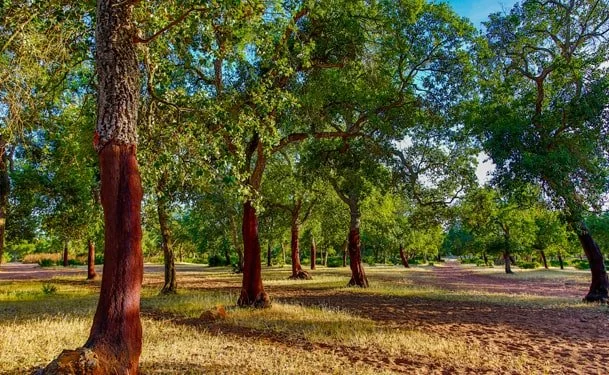
Morocco’s cork oak forests are climate powerhouses, locking away massive amounts of carbon in both trees and soil. A recent study of the Maâmora cork oak forest, published in “Spring Nature” magazine, shows that older trees store far more carbon than younger ones, but young stands grow fast and capture carbon at higher rates.
Researchers measured carbon in four key reservoirs: aboveground biomass, roots, litter and deadwood, and soil, across six age classes, from less than ten years old to over 120 years.
The amount of carbon stored in these forests increased as they aged — from about 49 metric tons of carbon per hectare in the youngest areas to about 231 metric tons per hectare in the oldest. Most of this carbon was stored in the soil rather than in the trees themselves.
Aboveground trees, roots, and litter added smaller but still significant amounts, showing tightly connected carbon cycles across the forest ecosystem.
Strong correlations among carbon reservoirs indicate tightly coupled carbon cycling within cork oak ecosystems. While soil is the largest reservoir, older stands show comparable carbon storage in aboveground biomass, highlighting the importance of preserving ancient trees.
Cork oak forests continue accumulating biomass for decades, with soil carbon stocks remaining stable or increasing over time due to continuous inputs from litterfall, root turnover, and rhizodeposition.
These findings provide valuable data for forest management, policy frameworks, and carbon accounting in Mediterranean and dryland ecosystems.
The study underscores the need to map forest age to improve carbon sink estimates. Ignoring age effects could lead to biased carbon accounting. The data also highlights the role of older forests in carbon conservation and the potential for forest carbon pricing policies to incentivize protection.
By linking age-specific carbon dynamics to forest management, the research provides a scientific basis for enhancing the contribution of cork oak forests to climate change mitigation, ensuring these Mediterranean ecosystems are persistent carbon sinks.