
Cork, plastic or aluminum? Which material makes the best wine stopper?
Original article by lafittecork.com
Choosing the right closure for wine bottles is a crucial decision for winemakers, as it directly impacts the quality, aging potential, and environmental footprint of the wine. In recent years, alternative closure materials, such as aluminum and plastic, have emerged alongside traditional cork stoppers. In this article, we will compare cork, aluminum, and plastic as materials for wine closures, examining their sealing ability, production resource use, environmental impact, and other relevant aspects. By understanding the characteristics of each material, we can make informed decisions that balance tradition, innovation, and sustainability in the wine industry.
Sealing Ability
-
Cork stoppers are known for their exceptional sealing ability, ensuring a reliable closure for wine bottles. Cork's elasticity allows it to conform to the bottle's neck, forming a tight seal that prevents oxygen from entering the bottle while enabling controlled oxygen exchange for wine aging. This characteristic is crucial for preserving wine quality and promoting the development of complex flavors and aromas over time.
-
Aluminum closures, commonly used in the form of screw caps, provide an effective seal against oxygen. These closures offer a reliable barrier and eliminate the risk of cork taint, a fault caused by a chemical compound called TCA. However, aluminum closures may not allow the same level of controlled oxygen exchange as cork, which can limit the wine's aging potential.
-
Plastic closures, including synthetic corks and plastic screw caps, offer a consistent and tight seal. While they effectively prevent oxygen ingress and eliminate the risk of cork taint, their impermeability to oxygen can hinder the wine's development during aging, potentially limiting its complexity and character.
FAQ: TCA
-
TCA stands for 2,4,6-trichloroanisole, a chemical compound that can develop in certain conditions involving the interaction of fungi, chlorine-based sanitizers, and natural airborne phenolic compounds.
TCA is commonly associated with cork taint in wines and is known to cause musty, damp, or moldy aromas and flavors that can significantly alter the sensory profile of the affected wine. It is important to note that TCA can also be found in other materials, such as wooden barrels or packaging materials.
-
"Cork taint" refers to the presence of TCA in wine, resulting in off-flavors and aromas.
Estimating the exact prevalence of cork taint is challenging, as it can vary depending on factors such as cork quality, storage conditions, and individual sensory perception. However, studies suggest that the incidence of cork taint has been reduced to around 1-2% or even lower, thanks to the implementation of improved quality control practices in cork production.
-
The prevalence of TCA has decreased significantly over the years due to advancements in cork production and quality control measures. At Lafitte, we have several quality control procedures in order to ensure our cork stoppers - both natural and technical - are TCA-free. Our highly sensitive and precise PerfectGO technology allows us to offer our clients 100% TCA-free batches of natural cork stoppers with a buyback agreement.
Production Resource Use
-
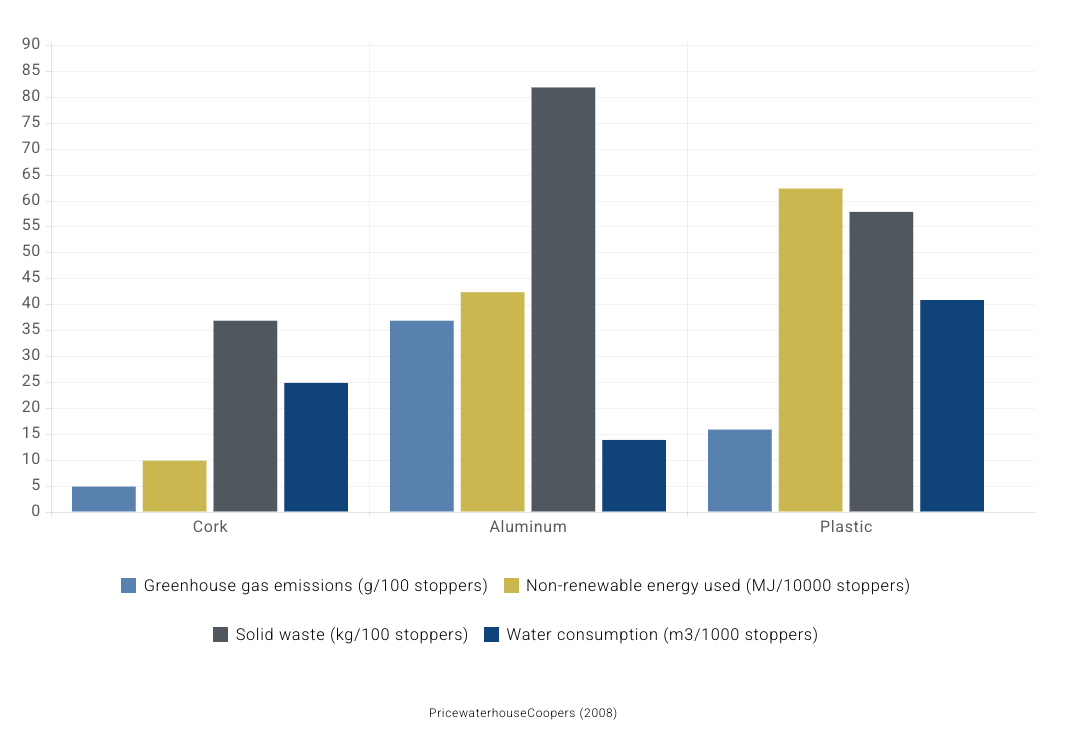
Cork production is a sustainable process that relies on the careful harvesting of cork oak bark, a process that supports the health and longevity of cork oak forests, which act as valuable ecosystems.
Harvesting cork does not require cutting down trees, as the bark regenerates naturally. Furthermore, cork production has a relatively low energy consumption and carbon footprint, making it an environmentally friendly option.
-
Aluminum production requires significant amounts of energy and raw materials. The extraction of bauxite, the primary source of aluminum, involves extensive mining processes that can have detrimental environmental impacts.
Moreover, the energy-intensive smelting process contributes to greenhouse gas emissions. While aluminum is recyclable, the production phase is resource-intensive compared to cork.
-
The production of plastic closures, particularly those made from petroleum-based materials, relies heavily on fossil fuel extraction and refining. This process contributes to carbon emissions and environmental pollution.
Additionally, plastic closures are not biodegradable and can persist in the environment for hundreds of years. However, some plastic closures are made from recycled materials or bio-based plastics, which can reduce their environmental impact to some extent.
Environmental Impact
-
Cork stoppers have a positive environmental impact due to their sustainable production and ability to preserve cork oak forests. These forests play a crucial role in combating desertification, supporting biodiversity, and providing livelihoods for local communities. Choosing cork closures encourages the preservation of these valuable ecosystems and contributes to the sustainability of the wine industry.
-
Aluminum closures have a higher environmental impact compared to cork due to their energy-intensive production process and reliance on non-renewable resources. While aluminum is recyclable, the recycling process also requires significant energy inputs. Additionally, the extraction of bauxite can result in habitat destruction, soil erosion, and water pollution.
-
Plastic closures, especially those made from petroleum-based materials, have a detrimental environmental impact. The production and disposal of plastic closures contribute to pollution, resource depletion, and marine plastic waste. However, some plastic closures made from recycled or bio-based materials can offer a reduced environmental impact compared to traditional plastics.
Other Relevant Aspects
-
Cork stoppers hold cultural significance and tradition within the wine industry. The ritual of uncorking a bottle sealed with cork carries a sense of elegance, history, and connection to winemaking heritage. Additionally, the natural texture of cork provides a tactile experience and enhances the overall wine-drinking ritual.
-
Aluminum closures, particularly screw caps, are favored for their convenience and ease of use. They eliminate the need for corkscrews and ensure consistent and reliable sealing, allowing for easy resealing after partial consumption. The ability to reseal bottles with aluminum closures helps preserve wine freshness and reduces the risk of spoilage.
-
Plastic closures offer consistency and ease of use, similar to aluminum closures. Synthetic corks are popular for their compatibility with traditional corking machinery and lower risk of cork taint. They also provide an alternative for consumers who prefer a closure that is easier to remove than traditional corks.
In Conclusion
Choosing the right closure material for wine bottles involves weighing various factors, including sealing ability, production resource use, environmental impact, and cultural significance. While cork, aluminum, and plastic each have their merits and drawbacks, cork stoppers stand out as the most sustainable option, combining excellent sealing ability, renewable resource use, and a positive environmental impact. However, alternative closures like aluminum and plastic can offer convenience and consistency, depending on specific requirements.
Ultimately, the choice of closure material should align with the winemaker's philosophy, the wine's characteristics, and the desired balance between tradition, innovation, and sustainability. By making informed decisions, the wine industry can continue to evolve while minimizing its environmental footprint and preserving the timeless art of winemaking.