
Olive pits, sweetcorn cobs and no rubber pellets: future of 3G pitches
Original article by Jonathan Northcroft thetimes.com
All-weather surfaces will have to change — and the answer to a global problem could well be found at a Football Foundation facility on a windy hillside in Sheffield
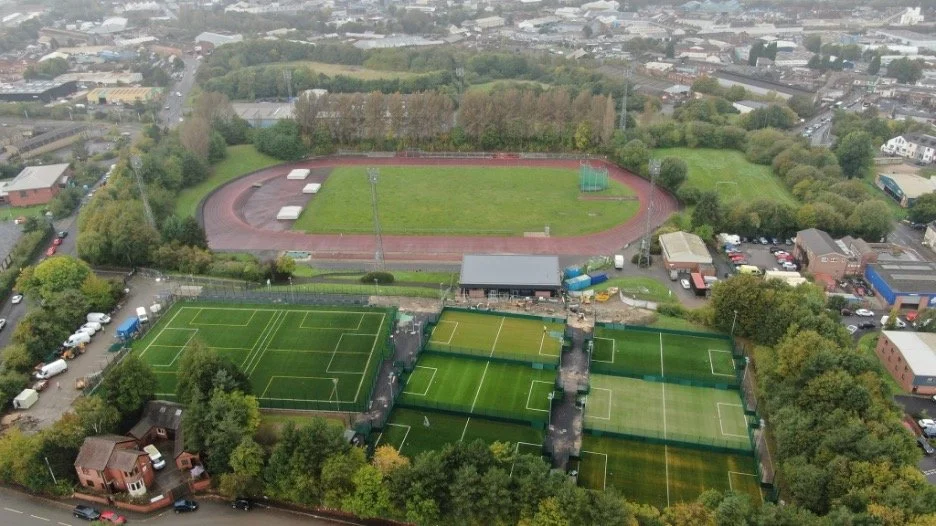
A range of new surfaces — including olive pits, crumbled cork and Georgia Yellow Pine are being tested by the Football Foundation in Sheffield
The olive pits are the most commented on. “A bit crunchy underfoot,” players say, and some wonder about making sliding tackles across a bed of ground up olive stones — but it’s robust and the Scandinavian market is interested because the stuff never freezes.
The crumbled cork is popular — nice and springy as you might expect. And the Georgia Yellow Pine? It sounds like a new shade on a fancy paint chart but, goodness, it’s zippy. Josh Windass and a bunch of Sheffield Wednesday players came here and had a game and loved the speed they could play passes at. But therein lies the problem. The ball roll is too quick to pass a Fifa test.
I’m on a hillside in Sheffield at a world-leading test facility owned by the Football Foundation and wondering where conversations about the infill of synthetic football pitches have been all my life. The subject is so interesting.
And important — because from Power Leagues, to school fields, to the pitches used by grassroots teams on the edge of the professional game, so many footballers around England play or train on all-weather surfaces laid with 3G turf, and that 3G turf is going to have to change.
What the Football Foundation are doing here is attracting global interest and being watched closely by rugby and other sports. They are running a trial of organic alternatives to rubber crumb, currently the standard infill for 3G pitches which — and a lot of users and providers of artificial pitches don’t realise this — faces being phased out because of environmental concerns.
Rubber crumb is those tiny black pellets that sit underneath the blades of synthetic turf, and the bane of so many grassroots footballers and parents of children who play on all-weather surfaces because of how players end up taking home the crumb on their clothing and boots. The pellets are needed to meet Fifa standards and are spread throughout the blades of grass to provide a natural feel similar to real turf and make the pitch more durable and weather-resistant and add shock absorption and traction.
But the rubber crumb is also a microplastic — made from recycled tyres — which gets into the water course and last September the European Commission outlawed the installation of synthetic pitches filled with it from October 2031, with the UK expected to adopt a similar policy.
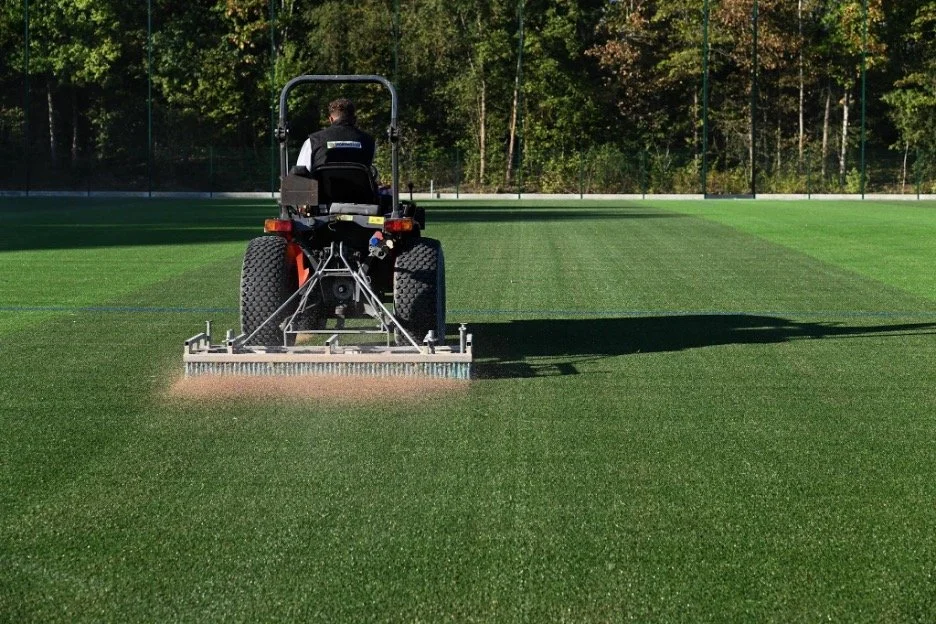
Pitches that use olive pits — ground up olive stones — are a more environmentally friendly surface than 3G surfaces that use rubber crumb
- Josselin Clair/Le Courrier de l’Ouest/Alamy
It effectively leaves grassroots sport another seven years from now to phase out rubber crumb and find a greener way of constructing all-weather pitches, which is where the Football Foundation’s testing comes in.
At their Woodburn Road Gordon Banks Football Hub the Football Foundation, a charity partnership funded by the Football Association, Premier League and government, have laid seven synthetic pitches each with a different infill. One uses rubber crumb, another the much-talked-about olive pits, another sand, and another cork crumbs.
Two use wood grit derived from different trees — Norwegian birch and Southern Yellow Pine from the US state of Georgia. Finally, on Pitch 1 of the facility, there is infill made from grinding the husks of sweetcorn cobs. Players are so-so about it and in shaded corners of the pitch, where it is damper, there has been some fungus growing — that’s what you get with organic material.
This football hub is open to the public and is a popular spot for social five-a-side games but also more serious players — even from the professional ranks — to come to do a bit of training. After using a pitch, players scan a QR code and, via an app, answer 15 questions about their experience — things like: how would you rate the stability of the pitch? How confident were you making quick changes of direction without losing your footing?
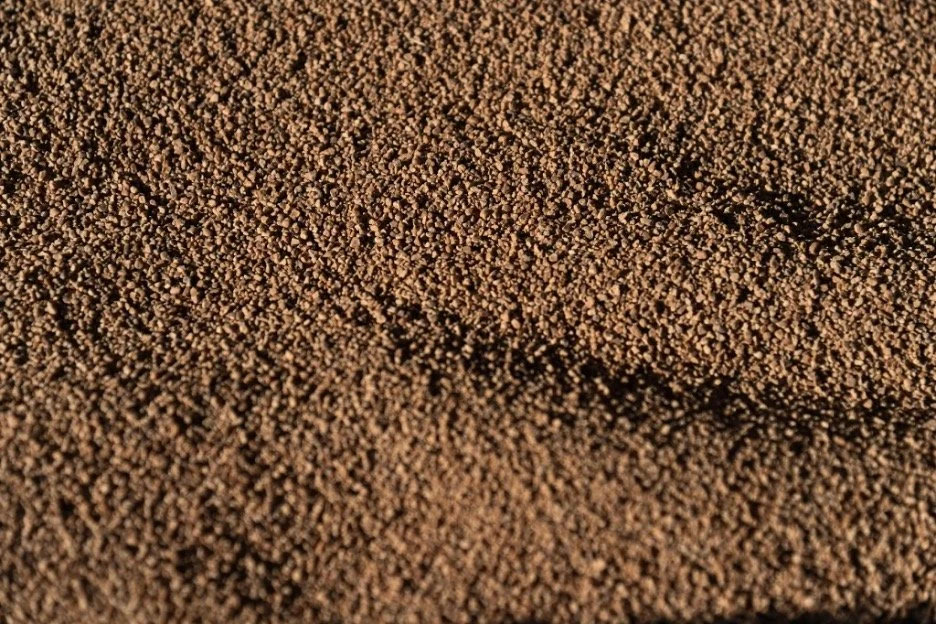
Players at the facility in Sheffield answer a survey about their experiences of using one of the alternatives to 3G pitches, such as olive pits, above
- Josselin Clair/Le Courrier de l’Ouest/Alamy
The feedback from the trial — which began earlier this year and will run through the winter months, to give a year-round picture — will be used to shape the Football Foundation’s future projects, of which there are many and which are vital to the health of the sport.
The charity receives around £150million per year from the FA, Premier League and government which it invests alongside local match funding to improve grassroots facilities in England; it estimates it will need to fund something in the region of £4billion of work over the next 20 years — including another 2,000 full-sized artificial pitches around the country. To build a pitch complete with fencing and floodlighting costs between £850,000 and £1million, while replacing an existing carpet for a full size pitch costs in the region of £250,000 to £300,000.
Thirteen members of England men’s Euro 2024 squad played their early football on Football Foundation-funded community pitches, as did 14 of the last England women’s World Cup squad.
“Grassroots football in England is in a fantastic place. The pace of growth, both on the boys’ side but in particular the women and girls’ side, is unprecedented,” Robert Sullivan, the Football Federation chief executive, said. “With that comes a challenge. We need as many good quality pitches as possible for people to play and enjoy the game. We’re investing in new artificial pitches, improved grass pitches, changing rooms, club houses, small-sided courts. We want every community to have a great place to play.
“Why just wait for the market to find a solution to replace rubber crumb?
“Black rubber crumb, that comes home on your, or your kids’ football kit and gets into the washing machine, would be familiar to many people. It gets into the watercourse and is an environmental problem.”
You get the feeling that this windy hillside in Sheffield is at the centre of something that may be niche but is also global. The olive pits and the ground corn husks come from France, the cork crumb from Portugal, and the synthetic grass is from the Netherlands, for example.
Last week the Football Foundation took an unexpected call from football administrators from Chile, wondering how a project that might change the grassroots game, and the environment, is getting on.